Episode Overview
This is the third episode of the Prospecting PA Audio Archive, and it's the one I think every prospector in the Northeast should listen to. Because it covers a target that almost nobody is talking about — a hundred mile long gold-pyrite belt that runs from southeastern New York through northern New Jersey into eastern Pennsylvania.
You'll learn:
- The Schuyler Mine and the trace gold in the Watchung copper deposits — why the Triassic Watchungs have copper but no Cornwall-type gold (the missing ingredient was the host rock)
- The Shawangunk gold-pyrite belt — a 430-million-year-old conglomerate with documented gold values at the contact with the underlying Ordovician slate, ignored by modern prospectors
- The Pahaquarry Mine — the Montgomery Gold Leaf Mining Company's failed 1901-1911 attempt to work the gold-pyrite contact, and what they found
- The 100-mile strike length — why the geological contact is exposed at multiple points along Kittatinny Mountain, and why almost none of those points have been explored in the modern era
- Why the Delaware Water Gap area is the most accessible modern target — the public land, the access, and the regulatory considerations for working on NPS-administered land
Image Gallery
Howdy partner, welcome back to the Prospecting PA audio archive. This is the Prospecting PA show, where we dig into the geology of the Northeast to figure out where the gold is, why it's there, and how to find more of it.
Last episode, we covered the glacial gold story — how the gold in your pan at Meshoppen Creek came from the Abitibi Greenstone Belt in Canada, transported south by the Laurentide Ice Sheet. That's the dominant gold story across the northern tier of Pennsylvania and most of New York. But there's a second gold story, a much older and more surprising one, that runs through the rocks of New Jersey and eastern Pennsylvania. A story that almost nobody talks about. A story that involves a four hundred and thirty million year old conglomerate, a copper mine that the Dutch were working in seventeen twenty one, and a gold-pyrite belt that a single mining company tried to work for gold in nineteen oh one and then largely forgot about.
This is the Watchung Mountains Surprise. And it might just be the most underrated gold target in the Northeast.
To start, we have to talk about a mine. The Schuyler Mine, in what's now North Arlington, New Jersey, just across the Hackensack River from Newark. This mine was opened in seventeen nineteen by Arent Schuyler, a Dutch colonist with political connections and a lot of slaves. By seventeen twenty one, the mine was producing enough high-grade copper ore that Schuyler was shipping it to Holland — one hundred and ten casks of unsmelted ore, loaded on a ship in New York, sent across the Atlantic to Dutch smelters.
Now, why is this relevant to a gold podcast? Because in seventeen twenty one, the Schuyler ore was more than just copper. A prospectus for the later Schuyler Copper Mining Company, written around eighteen hundred, said this verbatim: "The ore of the Schuyler's mine yields, in each hundred pounds of copper, from four to seven ounces of silver, and like most copper ores, a small portion of gold." Four to seven ounces of silver per hundred pounds of copper. A small portion of gold. That's a real gold content. Small, but documented, in a working copper mine.
The Schuyler Mine sat in the Watchung Mountains — actually in the Newark Basin, which the Watchungs are the surface expression of. The Watchungs are three long basalt ridges running roughly north-south through central New Jersey, separated by red shale valleys. The basalt is Triassic in age — the same two hundred million year old Central Atlantic Magmatic Province event that produced the Triassic diabase intrusions in southeastern Pennsylvania that we covered in Episode One. Same magma, different expression. The Watchungs are surface lava flows, the Palisades Sill and the Pennsylvania diabase sheets are intrusive sills. They're all part of the same continental rifting event that opened the Atlantic Ocean.
The copper deposits in the Watchungs are not the same as Cornwall-type. They're sediment-hosted copper, where copper-bearing fluids percolated through the Triassic-age red sandstones and shales. The Schuyler Mine, the Griggstown Mine, the Flemington Mine, the Chimney Rock Mine, the Stony Brook Mine — all of these are sediment-hosted copper in the Newark Basin sediments, sitting underneath or adjacent to the basalt flows. The copper is real. The mines were real. They produced millions of pounds of copper between seventeen nineteen and the early nineteen hundreds.
But the gold content? Documented in passing, in old prospectuses and assay reports, but never seriously pursued. The New Jersey Geological Survey, in their massive nineteen forty-four Bulletin 57 — the definitive compilation of New Jersey copper mines — notes that "assays reporting native gold have been submitted by various mine owners" at multiple Watchung locations, including Griggstown, Flemington, and Pluckemin. Background levels, not ore-grade. The bulletin is candid: there's gold in these deposits, but the concentrations were too low to make a dedicated gold mining operation economic at the time.
So if the Watchung copper mines have trace gold, and the Triassic diabase intrusions in Pennsylvania have produced sixty-seven thousand ounces of gold at Cornwall, why is there no Cornwall-type gold deposit in the Watchungs? The answer is host rock.
Cornwall-type deposits require a calcareous host rock. Limestone. The Triassic diabase at Cornwall pushed into Cambro-Ordovician limestone, and the resulting contact metamorphism — the heat and the fluids — created the magnetite-plus-sulfide-plus-gold system. No limestone, no Cornwall-type deposit.
In the Watchungs, the Triassic basalt flows sit on Triassic red sandstones and shales. No limestone. The chemistry that creates magnetite-plus-sulfide-plus-gold requires calcium to react with. The sandstone-shale package doesn't have it. So the Watchungs get sediment-hosted copper, which is a real and economic deposit, but they don't get Cornwall-type IOCG. The structural story is continuous from Pennsylvania to New Jersey — the same Triassic magma, the same Central Atlantic Magmatic Province, the same Atlantic rifting event — but the geological recipe for gold was incomplete.
This is the kind of thing that's easy to miss if you're just looking at the big picture. The structures line up. The chemistry partially lines up. The magmatic event is the same. But one ingredient was missing, and the gold never concentrated the way it did in Pennsylvania.
But here's the surprise. There's a completely different gold system in New Jersey, and it has nothing to do with the Triassic. It's about four hundred and thirty million years older. It's called the Shawangunk Conglomerate, and it forms a long ridge that runs from southeastern New York, through northern New Jersey, into eastern Pennsylvania. The ridge is called the Kittatinny Mountain in New Jersey. The conglomerate is Silurian in age — deposited about four hundred and thirty million years ago, in a braided river system that was eroding older mountain ranges to the east.
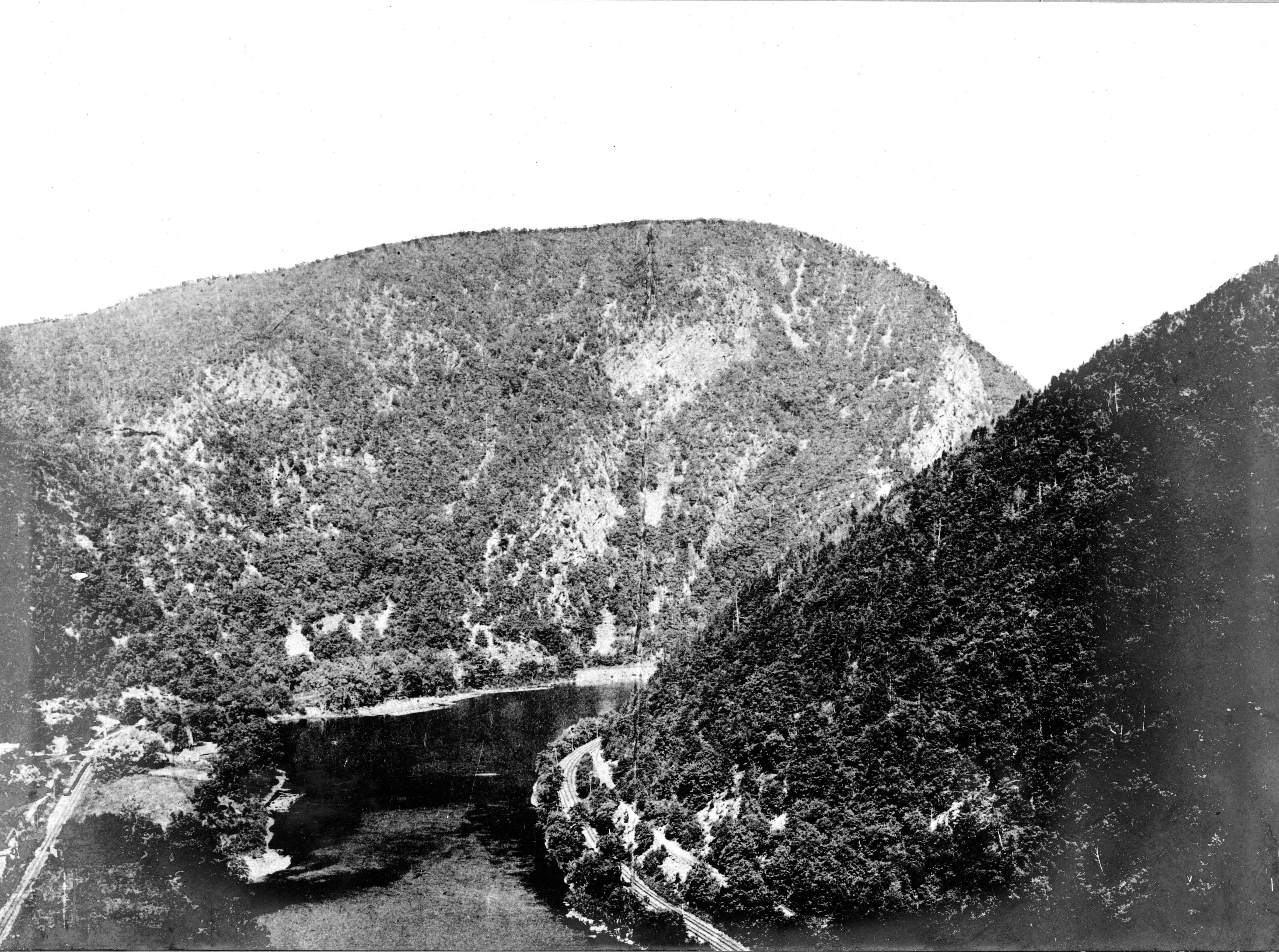
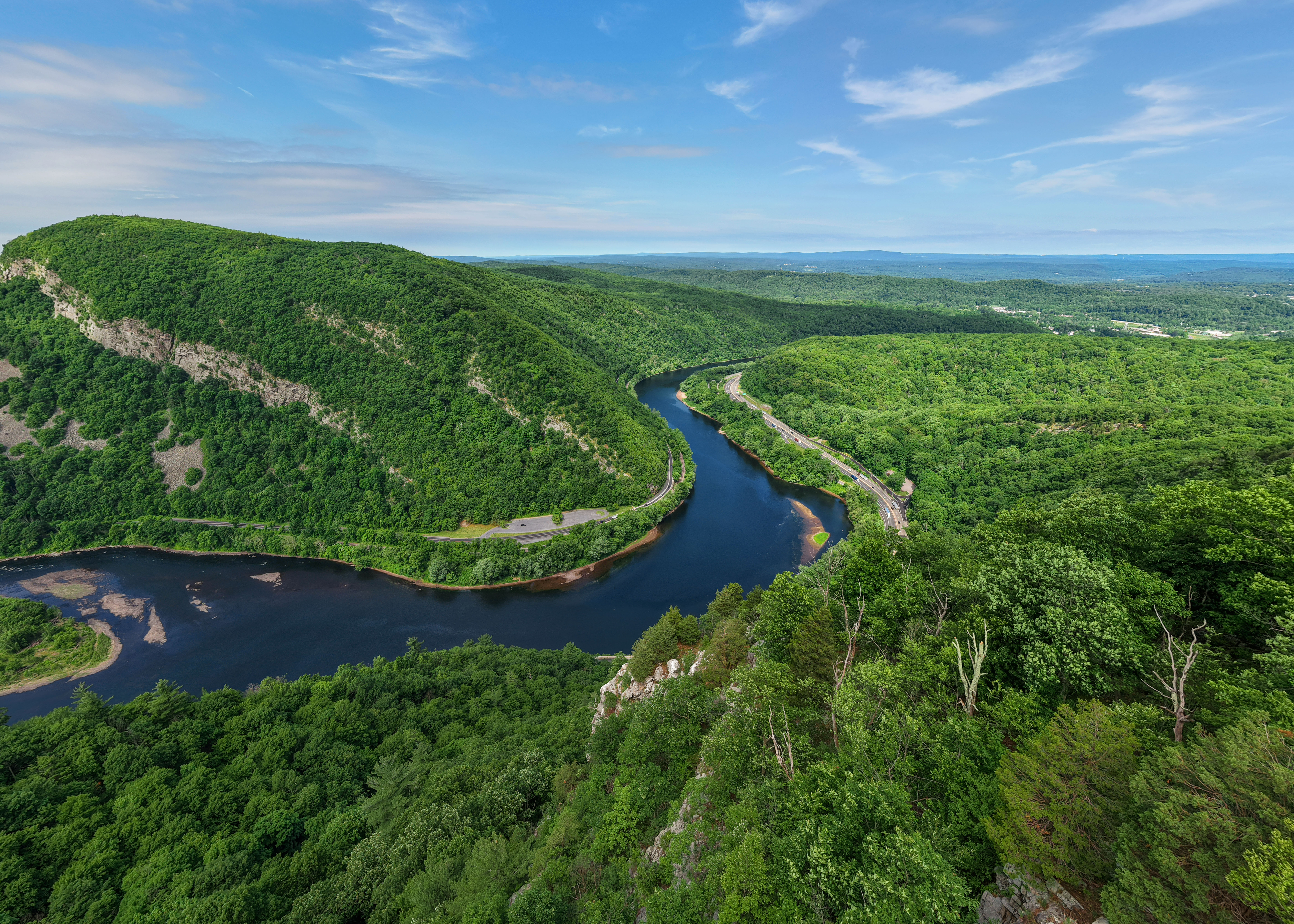
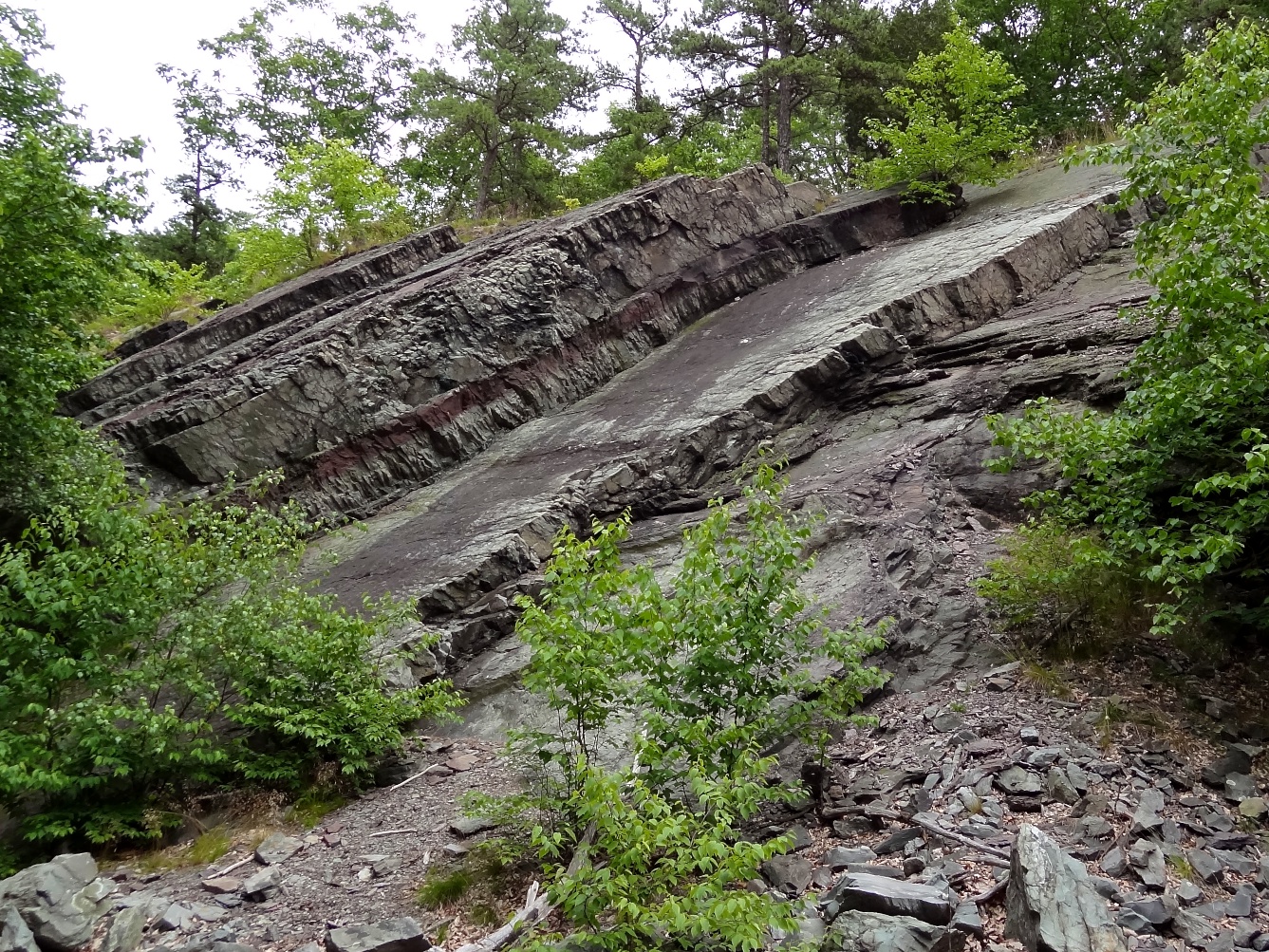
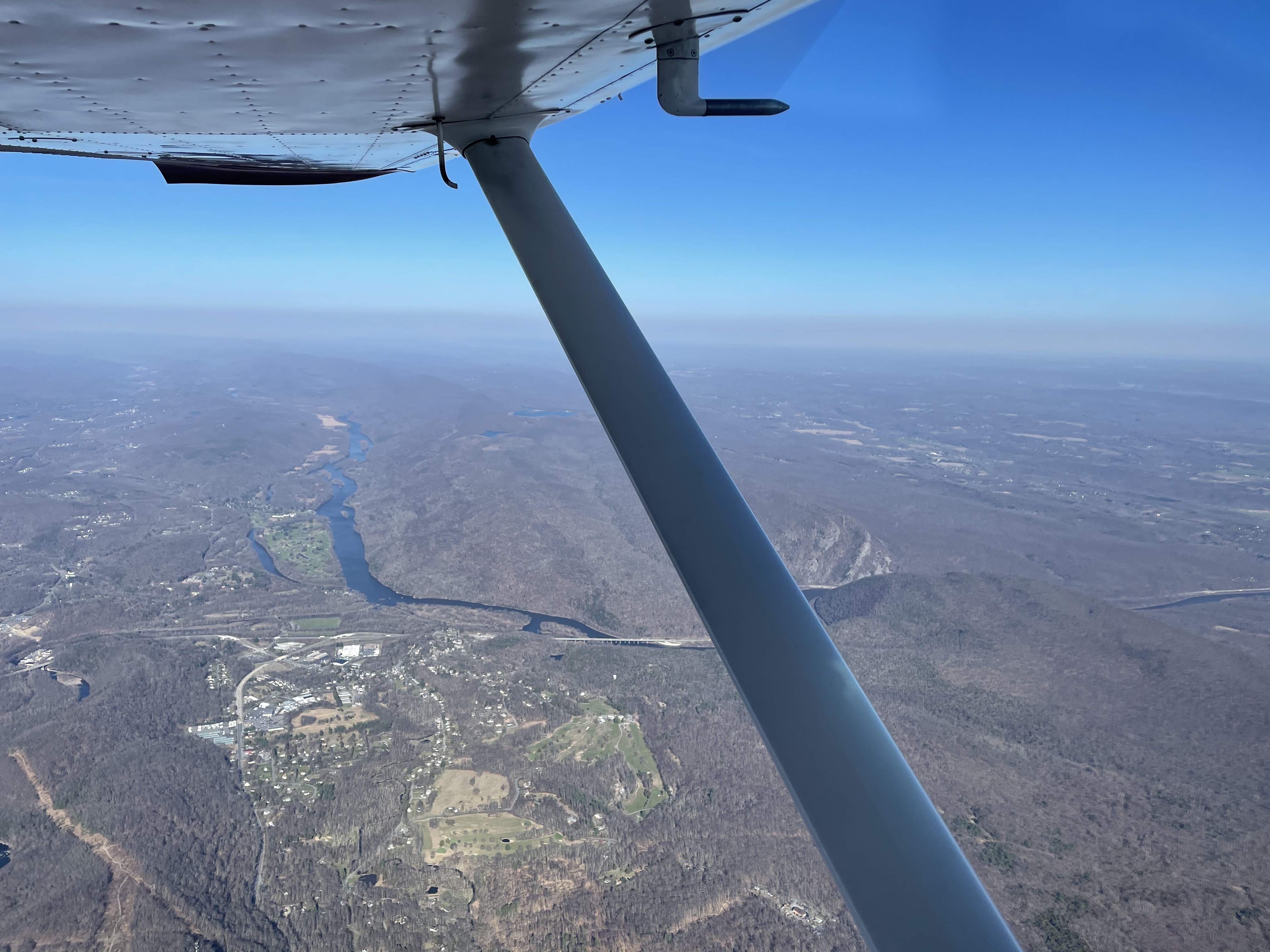
The Shawangunk Conglomerate is a hard, indurated, quartz-rich rock. It forms the bold rocky bluffs of Kittatinny Mountain, the same ridge you can see from the Delaware Water Gap. The formation is about two thousand feet thick near the Pahaquarry Mine. And here's the part that matters: the basal beds of the Shawangunk formation contain considerable pyrite, and it is reported that the lower few inches of the rock carry native gold, in places to an alleged value as high as eleven dollars a ton. That's the quote from the New Jersey Geological Survey Bulletin 57, published in nineteen forty-four.
Eleven dollars a ton in gold, at nineteen oh eight prices. Adjusted for inflation, that's roughly three hundred and fifty dollars a ton at today's gold prices. That's ore-grade. Not high-grade, but workable. The bulletin continues: "Anywhere along the outcrop of the contact between the conglomerate and the Ordovician slate, one can obtain pyrite ore that is rich in gold." The contact zone — the boundary between the Shawangunk conglomerate and the underlying Martinsburg shale of Ordovician age — is where the gold-pyrite mineralization sits. It's a stratabound deposit, restricted to a specific geological horizon, running along the entire outcrop of the contact.
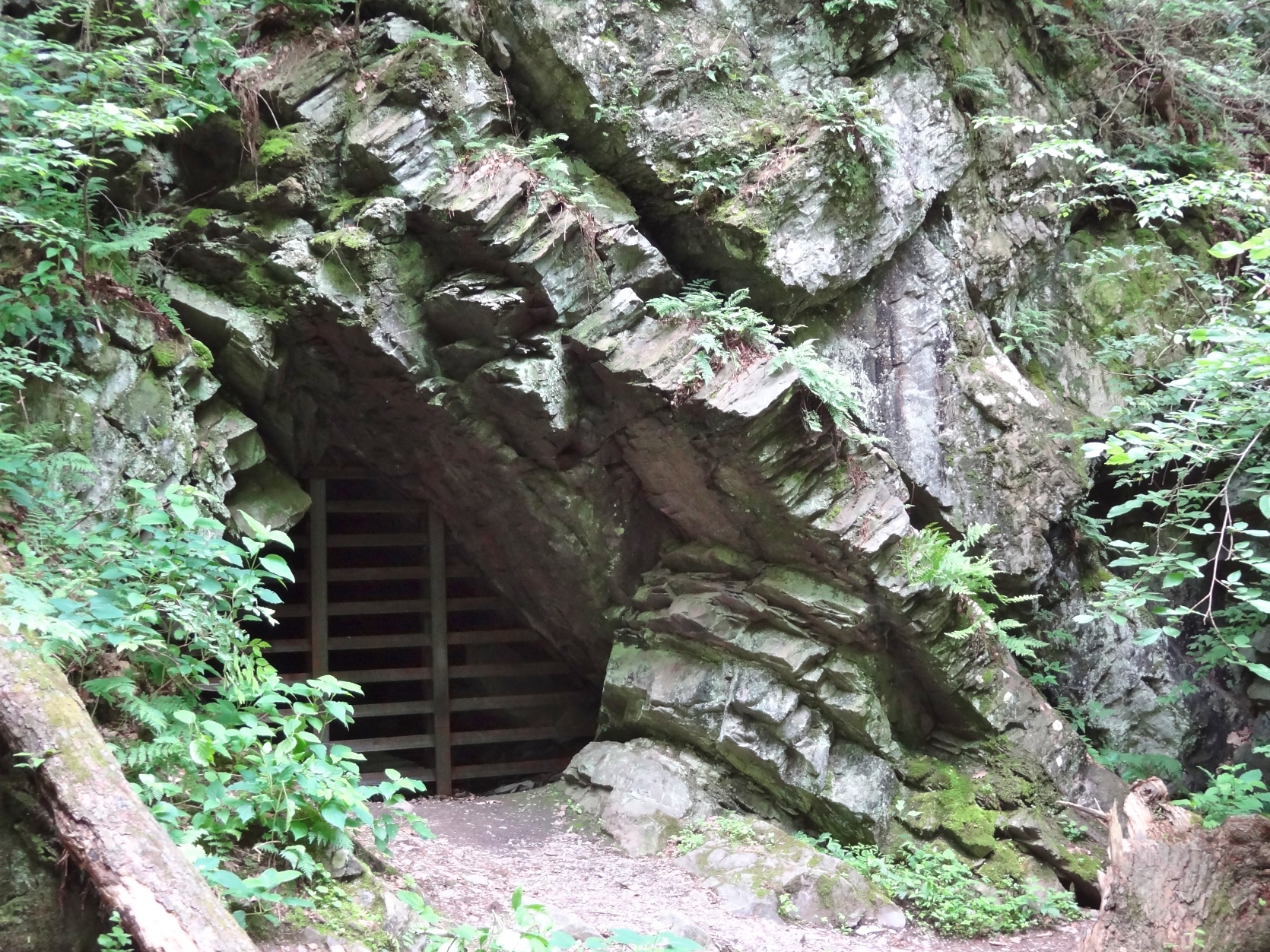
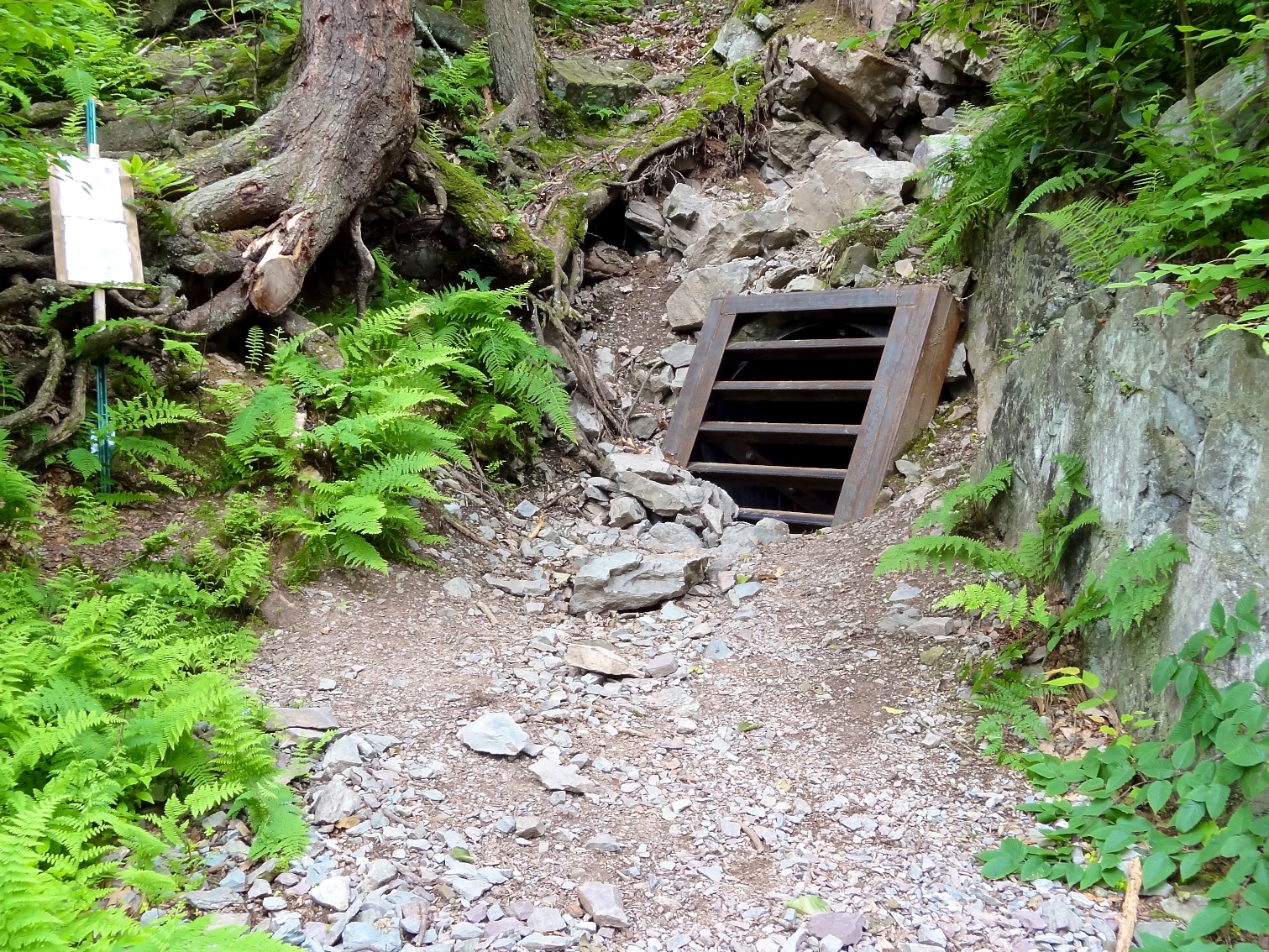
The Pahaquarry Mine sits on the Delaware River, right at the Pennsylvania-New Jersey border, just south of the Delaware Water Gap. The mine was opened by the Dutch in the sixteen hundreds as a copper operation. The property changed hands multiple times. In eighteen sixty five, the New Jersey Mining Company tried to work it. In eighteen eighty two, it was reorganized. And then, in nineteen oh one, the property was acquired by the Montgomery Gold Leaf Mining Company, which was specifically organized to mine the gold at Pahaquarry.
For ten years, from nineteen oh one to nineteen eleven, the Montgomery Gold Leaf Mining Company tried to make the Pahaquarry gold deposit work. They sank shafts. They drove adits. They built a stamp mill. They processed ore. The geological evidence was there — the contact zone between the Shawangunk conglomerate and the underlying Ordovician slate, with pyrite ore carrying gold values. But the company struggled. The deposit was real but thin. The gold values were inconsistent. The infrastructure was expensive. By nineteen eleven, the Montgomery Gold Leaf Mining Company had failed, and the property was abandoned.
The New Jersey Geological Survey, in Bulletin 57, summarized the geological situation with clinical precision: the basal beds of the Shawangunk formation contain pyrite, the contact zone is mineralized, and gold is present. The Montgomery Gold Leaf Mining Company attempted to work it and failed. End of story, as far as the official record goes.
But here's what's interesting. The Pahaquarry Mine sits on one end of the Shawangunk gold-pyrite belt. The belt extends along the entire outcrop of the Shawangunk formation, from Port Jervis, New York, southwest through the Delaware Water Gap, and on into eastern Pennsylvania. That's potentially a hundred miles of strike length. The Pahaquarry Mine is the only place along that entire strike length that was seriously worked for gold. Every other location along the belt — and there are dozens of locations where the contact zone is exposed — has been essentially ignored by modern prospectors.
So why does this matter for a modern prospector based in Pennsylvania or southern New York?
First, because the gold is real. The New Jersey Geological Survey documented it. The Montgomery Gold Leaf Mining Company worked it. The gold values at the contact zone are not enormous, but they're real, and the contact is exposed at multiple locations along the strike.
Second, because the geological setting is permissive. The Shawangunk Conglomerate is hard, well-indurated, erosion-resistant rock. It forms ridges. The contact with the underlying Martinsburg shale is exposed in road cuts, in stream valleys, in quarries. You don't have to dig deep. You can literally walk the outcrop and sample the basal beds of the Shawangunk, looking for pyrite and assaying for gold.
Third, because the historical exploitation is one hundred years old. The Montgomery Gold Leaf Mining Company failed in nineteen eleven. The geological understanding of how to explore for stratabound gold-pyrite deposits has advanced enormously since then. Modern assay techniques, modern structural geology, modern geochemical sampling — none of this was available to the Montgomery company. The Pahaquarry deposit might not be economic at today's gold prices with the techniques available in nineteen oh eight. But it might be economic with the techniques available in two thousand twenty six. Or it might not. But nobody has done the modern work to find out.
The Shawangunk gold-pyrite belt is the underrated gold story of the Northeast. It's a hundred mile long structural target. It crosses three states. The geology is exposed and accessible. The historical record is clear. And yet, there's been essentially no modern exploration for gold along this belt.
The Pennsylvania Geological Survey has no active project on the Shawangunk in Pennsylvania. The New Jersey Geological Survey hasn't updated Bulletin 57 since nineteen forty four. The New York State Geological Survey has done some work on the Shawangunk in the Ellenville area, where there's been intermittent small-scale gold mining, but no comprehensive modern survey.
This is a real research opportunity. A modern gold prospector with a rock hammer, a hand lens, a gold pan, and a willingness to walk the contact zone could find things. The Pahaquarry Mine area is on public land — part of the Delaware Water Gap National Recreation Area, which is administered by the National Park Service. The Delaware River itself is accessible. The old mine road is still there. The mine dumps are still there. The contact zone is exposed in the streambed of the Mine Run, which flows into the Delaware.
The catch: metal detecting and mineral collecting on NPS land requires a permit. The regulations are strict. The Park Service is wary of prospectors because of the long history of illegal collecting in the area. But for someone willing to work with the NPS, willing to follow the rules, willing to document what they find, this is a target that has not seen modern eyes.
So that's the Watchung Mountains Surprise, partner. The Watchung copper mines have trace gold, but no Cornwall-type deposit because the host rock is wrong. The Shawangunk gold-pyrite belt is a completely different story — Silurian conglomerate, four hundred and thirty million years old, contact zone with the underlying Ordovician slate, gold documented by the New Jersey Geological Survey, attempted exploitation by the Montgomery Gold Leaf Mining Company in nineteen oh one to nineteen eleven, and then essentially forgotten for a hundred and fourteen years.
Is it the next Comstock Lode? No. But it might be the most underrated gold target in the Northeast. A hundred mile long belt. A documented gold content. A permissive geological setting. And almost no modern exploration work.
That's it for this episode of the Prospecting PA audio archive. Next time, we'll talk about how to actually find gold in a pan — the technique, the equipment, the reading-the-water skills that turn a day on the creek into a productive day. Until then, keep your eyes on the ground and your pans in the creek. This is Agent Skookum, signing off.
Show Notes & Sources
Every claim in this episode is sourced. The primary references:
The Watchung Mountain Copper Mines
- New Jersey Geological Survey Bulletin 57 (1944) — "Copper Mines and Mining in New Jersey" by Herbert P. Woodward. The definitive compilation. NJGS PDF
- Schuyler Copper Mine Wikipedia article — en.wikipedia.org/wiki/Schuyler_Copper_Mine
- Bakewell, R. (1806) — early prospectus for the Schuyler Copper Mining Company documenting "a small portion of gold" in the ore
The Shawangunk Gold-Pyrite Belt
- New Jersey Geological Survey Bulletin 57 (1944) — Section on Pahaquarry Mine, the contact-zone gold-pyrite mineralization, the Montgomery Gold Leaf Mining Company work
- Epstein, J.B. and Epstein, A.G. (1969) "Geology of the Valley and Ridge Province Between Delaware Water Gap and Lehigh Gap, Pennsylvania," USGS
- Way, J.H. (1986) "Petrology of the Shawangunk Formation," Pennsylvania Geology
Image Credits
- View of the Delaware Water Gap (Dunfield) — Dunsfield / NYPL / Wikimedia Commons, Public Domain
- Delaware Water Gap aerial view — Famartin / Wikimedia Commons, CC BY 4.0
- Pahaquarry Copper Mine Adit 1, 2, Open Quarry — Wikimedia Commons, CC BY-SA 3.0
- Del Water Gap with PA town — Wikimedia Commons, CC BY-SA 4.0
For the full written version of the Shawangunk story, see the companion guide: Following the Structures North.